North Texas Soil pH: Why Some Plants Struggle—
Why Some Plants Struggle—and What You Can Do
Gardening advice that worked in another part of the country may not work in North Texas. One major reason is our soil chemistry.
Much of the Dallas–Fort Worth area has alkaline soil. That means its pH is above neutral. The exact pH varies considerably between neighborhoods—and even within the same yard—so do not assume you know your number without testing.
Why soil pH matters
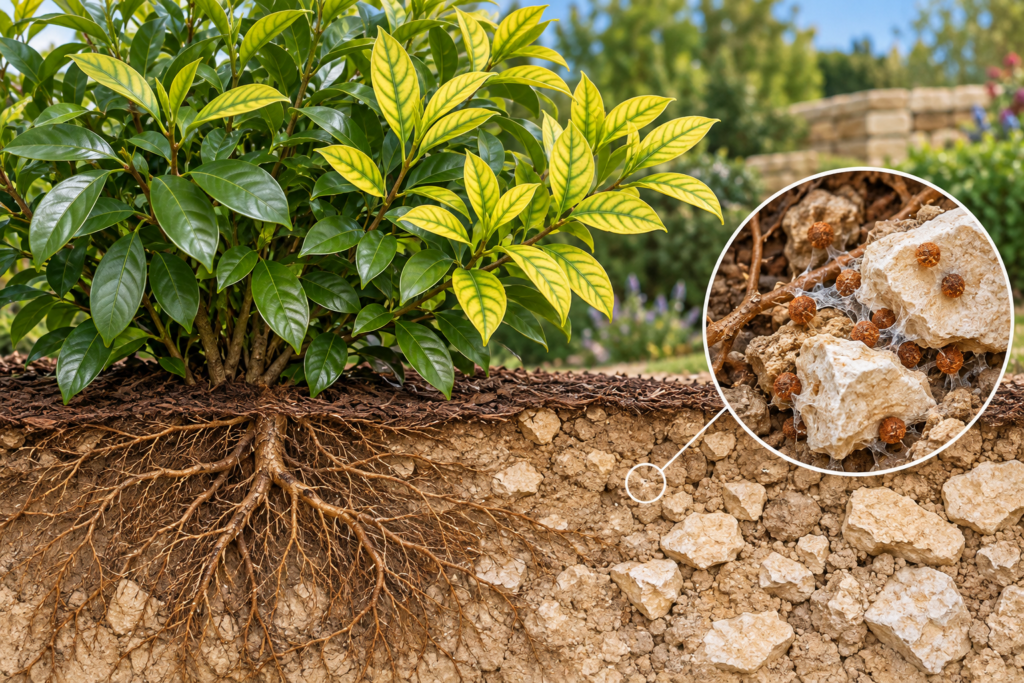
Soil pH affects how easily plant roots can absorb nutrients. Iron, manganese, and several other nutrients become less available in alkaline soil.
A plant may therefore show signs of a deficiency even when the nutrient is present. Common symptoms include:
- Yellow leaves with green veins
- Weak or stunted growth
- Poor flowering
- Plants that slowly decline despite regular fertilizer
- Acid-loving plants that never seem healthy
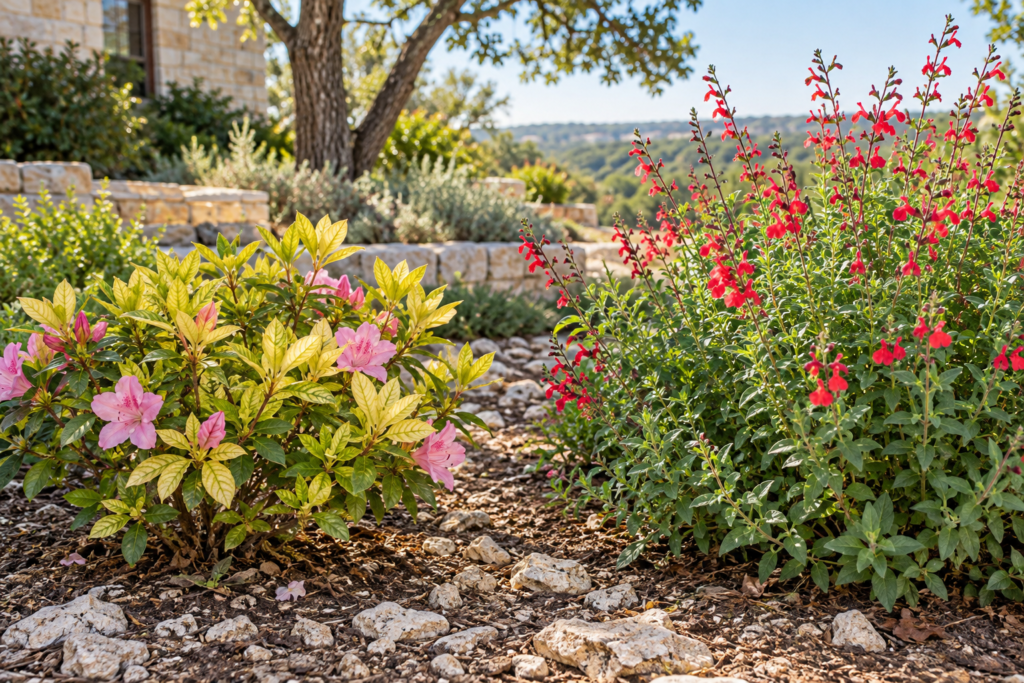
Azaleas, blueberries, gardenias, Japanese maples, and some hydrangeas frequently struggle in alkaline North Texas soil.
Test before treating
Begin with a laboratory soil test rather than an inexpensive probe from a garden center. Take samples from several places within the planting area and mix them together.
Texas A&M’s Soil, Water and Forage Testing Laboratory offers an urban soil test for lawns, gardens, and landscape beds. A proper test can identify pH and nutrient levels and prevent unnecessary fertilizer applications. Texas A&M soil-testing information
Test separate areas individually if their conditions are different. For example, do not combine soil from a vegetable garden, front lawn, and shaded flower bed in one sample.
Can North Texas soil pH be lowered?
It can sometimes be lowered locally, but permanently changing the pH of an entire yard is usually unrealistic. Our soil and irrigation water may continually push it back toward alkalinity.
Elemental sulfur can gradually lower soil pH when applied at the correct rate. However, adding too much can damage plants. Never guess at the amount; use the recommendation from a soil test.
Organic matter improves soil structure and biological activity, but compost should not be treated as a guaranteed pH reducer. Some compost is neutral or alkaline.
A more practical strategy
Instead of fighting the entire yard, use three approaches:
- Grow plants that tolerate alkaline soil.
- Create specially prepared raised beds for plants needing different conditions.
- Grow acid-loving plants in containers where you control the potting mix and water.
For iron chlorosis, chelated iron formulated for alkaline conditions may provide temporary help. It will not, however, correct poor drainage, damaged roots, or an unsuitable planting location.
The North Texas lesson
Soil pH is not something to “fix” once and forget. Learn what your soil naturally wants to do, select compatible plants, and make small, targeted improvements.
Suggested featured image: A gardener comparing a soil sample with a laboratory soil-test report.
Related reading: Gardening in North Texas Clay Soil and Plants That Actually Grow Well in North Texas.