How to Decide What Kind of Greenhouse You Should Build
A greenhouse should be designed around what you intend to accomplish inside it. Too many people begin by looking at attractive kits or deciding how large a structure will fit in the backyard. They buy the greenhouse first and only later discover that it is too hot, too small, too difficult to ventilate, or too expensive to heat.
A better decision process begins with the plants.
1. Decide exactly what the greenhouse will do
Write down the greenhouse’s primary purpose before comparing structures. Common uses include:
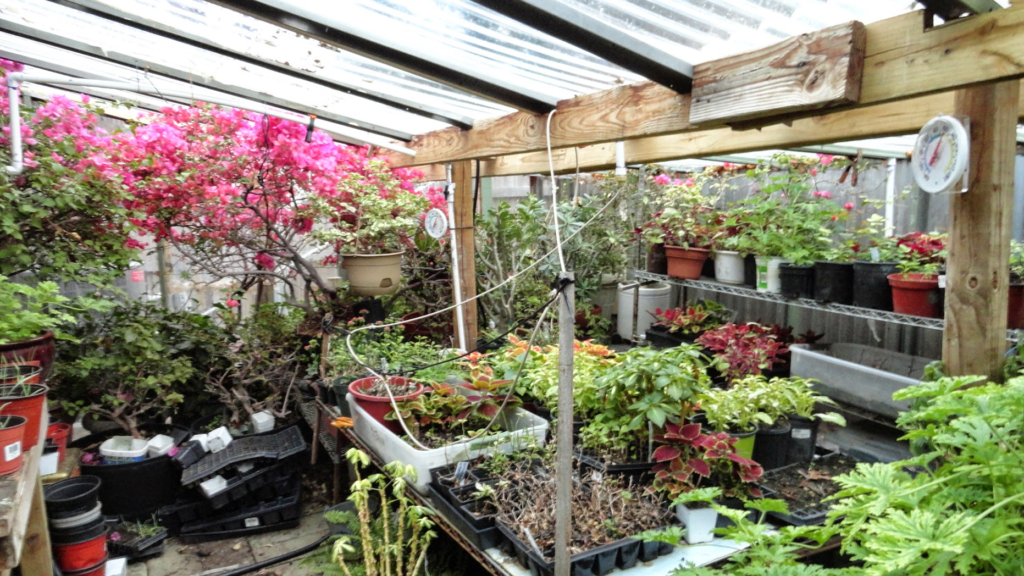
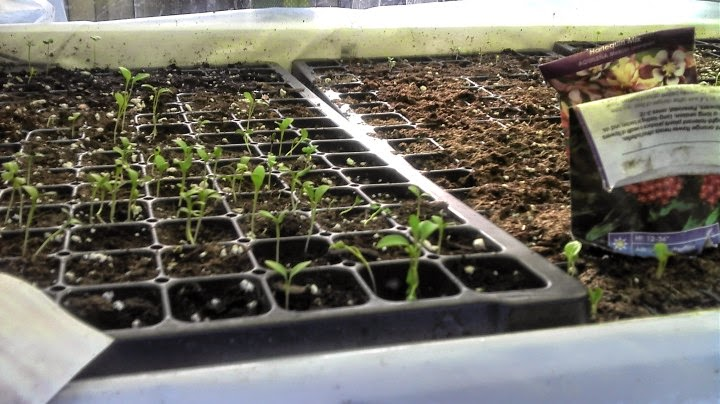
- Starting vegetable and flower seeds
- Rooting plant cuttings
- Protecting tropical plants during winter
- Growing vegetables through several seasons
- Producing plants for sale
- Maintaining a plant collection
- Creating a warm place to garden during winter
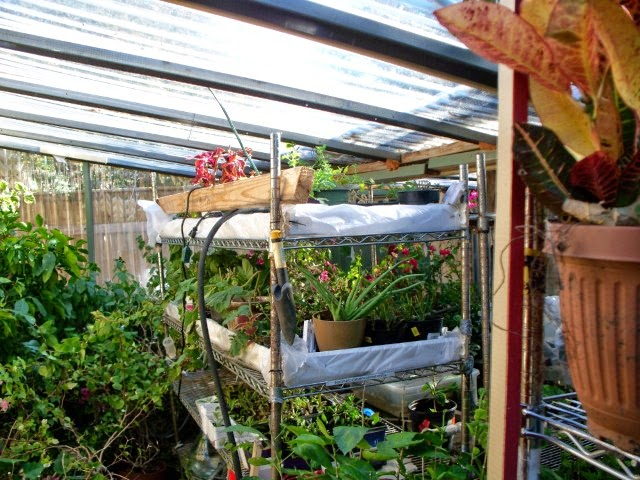
These uses require different environments. A greenhouse used only to start seeds in February and March does not need the same equipment as one protecting tropical hibiscus, crotons, and bougainvillea through January.
Propagation usually requires close control of humidity and root-zone temperature. Overwintering dormant plants may require only freeze protection. Producing attractive plants for sale demands dependable irrigation, ventilation, spacing, pest control, and working areas.
Choose one primary purpose and no more than two secondary purposes. Trying to make one small greenhouse perform every possible function usually creates conflicting conditions.
2. Determine when you will use it
Next, decide whether it will be used seasonally or throughout the year.
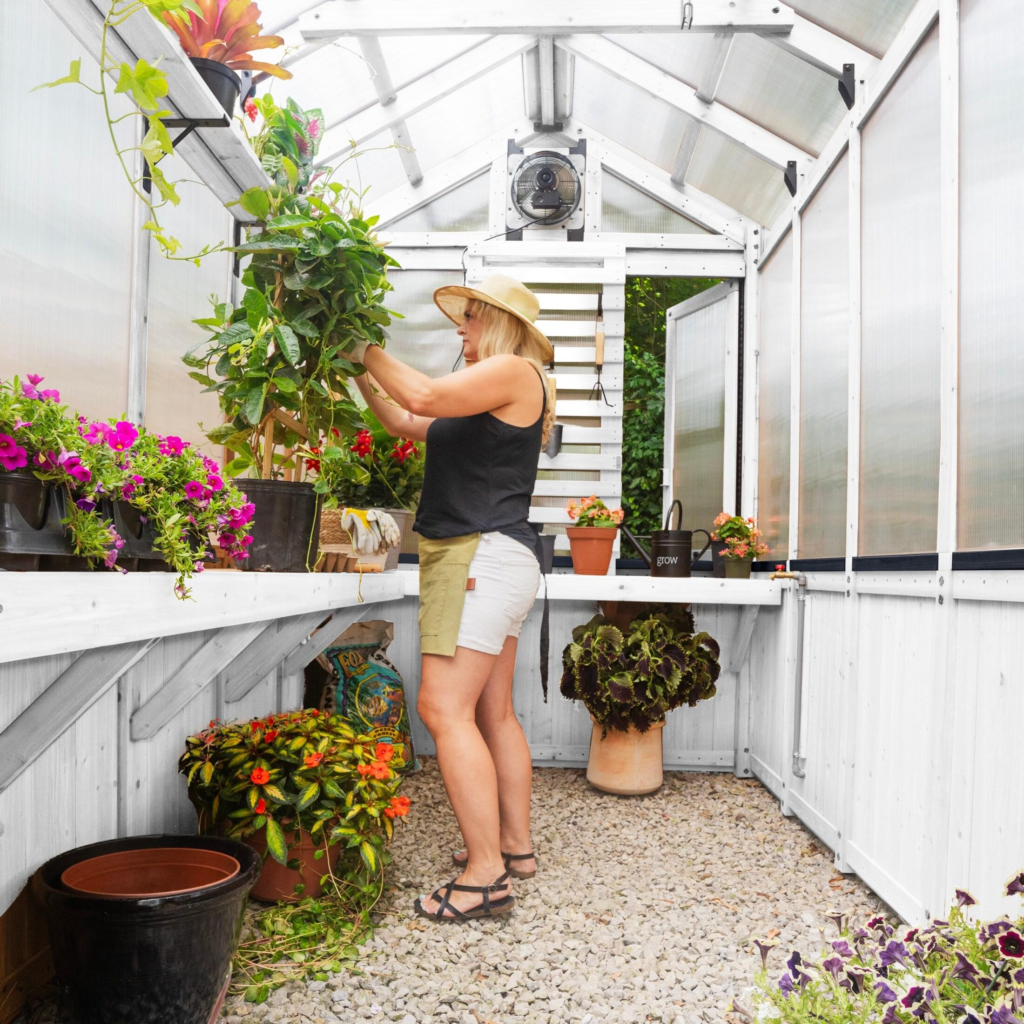
A three-season greenhouse is less complicated and less expensive than a greenhouse expected to operate through a North Texas summer. During July and August, keeping a greenhouse cool can be considerably harder than keeping it warm during an ordinary winter day.
A simple greenhouse may work well from fall through spring and then sit mostly empty during the hottest months. That is a reasonable choice. Year-round use will normally require powerful ventilation, shade cloth, circulation fans, dependable irrigation, and possibly evaporative cooling.
Winter operation creates different questions:
- What minimum temperature must be maintained?
- How many freezing nights can the area expect?
- What happens during a power failure?
- Are the plants merely surviving or actively growing?
- How much are you willing to spend on heating?
Protecting plants at 40°F is much less expensive than maintaining 65°F all winter.
3. Estimate the space you really need
List the plants you expect to keep and the container sizes they will occupy. Then draw the benches, aisles, propagation area, water source, potting space, and storage area.
Do not calculate capacity using floor area alone. A greenhouse filled wall to wall with plants becomes difficult to water, inspect, and maintain.
Allow space for:
- Comfortable aisles
- Air circulation around plants
- A potting or work bench
- Empty pots and growing media
- Hose and irrigation equipment
- Heaters and fans
- Plants as they become larger
- Temporary quarantine of new or unhealthy plants
Remember that propagated plants multiply quickly. Fifty cuttings in a small tray may eventually become fifty one-gallon plants occupying several benches.
If your goal is to produce plants regularly, design the greenhouse around the largest number expected at one time—not the number you have today.
4. Choose the best available location
A greenhouse needs sunlight, drainage, water, electricity, and convenient access.
Observe the proposed location through several parts of the day. Winter sunlight is particularly important because the sun is lower and nearby buildings or trees may cast long shadows. Summer afternoon shade can be helpful in North Texas, but heavy winter shade may make the greenhouse cold and inefficient.
Avoid low areas where rainwater collects. North Texas clay drains slowly, and standing water around a greenhouse creates mud, humidity, mosquitoes, and structural problems.
Convenience also matters. A greenhouse located far from the house may look attractive on a plan but become burdensome when plants require attention during rain, freezing weather, or extreme heat.
Before building, confirm local zoning rules, utility easements, setbacks, permit requirements, and homeowners association restrictions.
5. Select the structural style
Several greenhouse shapes are suitable for home use.
A hoop house is usually the least expensive. Its curved metal or PVC framework is commonly covered with greenhouse film. It is useful for seasonal growing, winter protection, and economical plant production. Film eventually needs replacement, and a lightweight structure must be anchored securely against wind.
A gothic-arch greenhouse has a higher, more pointed roof. It provides better headroom near the sides and sheds rain more effectively than a low semicircular hoop.
A rigid-frame greenhouse covered with polycarbonate costs more but usually provides a more permanent, finished structure. Twin-wall polycarbonate offers better insulation than a single thin covering and diffuses light well.
A lean-to greenhouse attaches to another building. It can offer easy access to water and electricity, but heat reflected from the building and limitations on sunlight and ventilation must be considered.
Glass is attractive and long-lasting but is heavy, expensive, and more vulnerable to impact. For many home growers, polycarbonate provides a practical balance between appearance, durability, insulation, and cost.
6. Plan cooling before heating
New greenhouse owners often concentrate on winter heat while underestimating summer cooling. Sunlight passing through a greenhouse covering can raise the inside temperature rapidly, even when the outdoor air feels comfortable.
Natural roof vents may help during mild weather, but North Texas conditions commonly require mechanical ventilation. Exhaust fans should work with properly sized intake openings so hot air can leave and replacement air can enter.
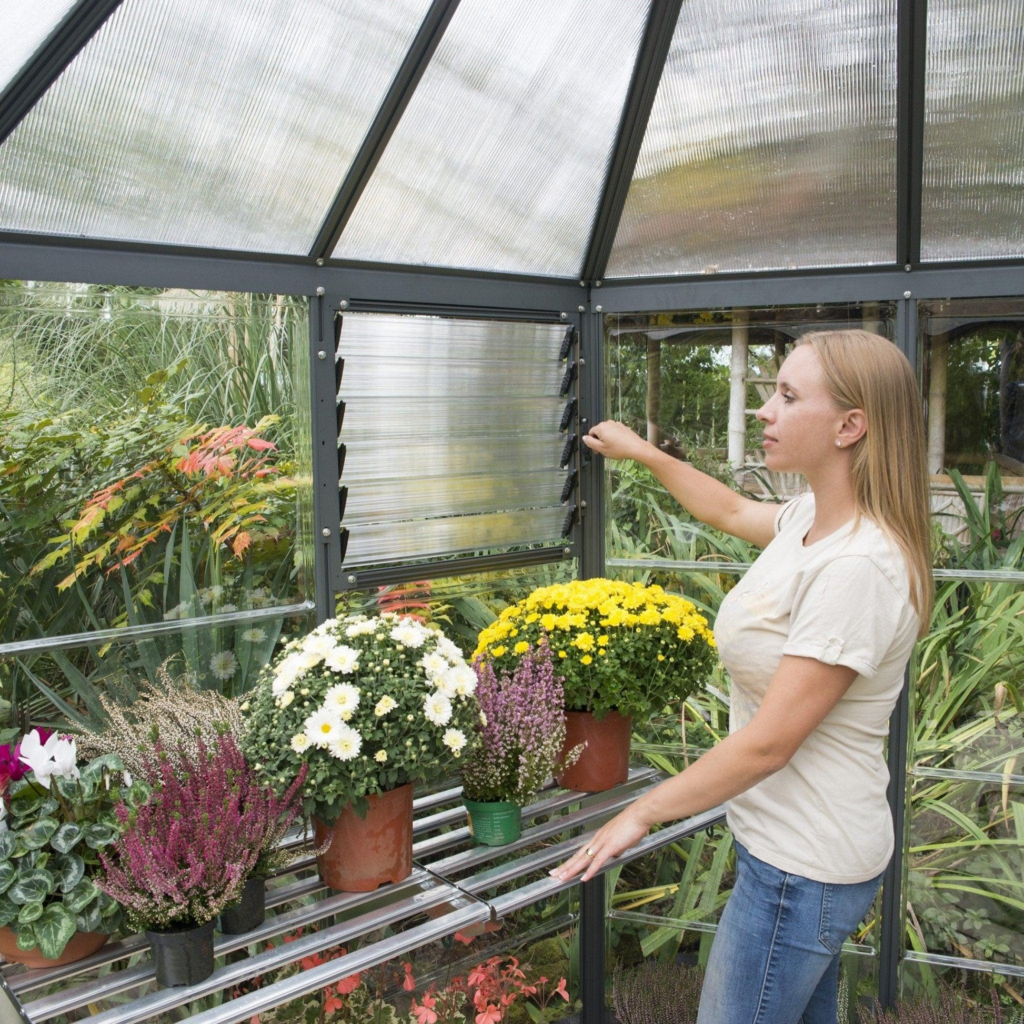
Horizontal airflow fans circulate air inside the structure. They help reduce stagnant areas but do not replace an exhaust system.
Summer equipment may include:
- Exhaust fans
- Intake shutters
- Circulation fans
- Exterior shade cloth
- Automated vent openers
- Evaporative cooling
- Thermostatic controls
- Backup temperature alarms
Exterior shade cloth generally blocks solar energy before it enters the greenhouse and is therefore more effective than trying to shade plants after the heat has entered.
7. Decide how plants will be watered
Hand watering may be adequate for a small collection, but it becomes time-consuming as plant numbers increase.
Drip irrigation can deliver water slowly to beds, shrubs, vegetables, and containers. A typical system uses a filter, pressure regulator, main tubing, smaller distribution tubing, and emitters. Texas A&M recommends drip irrigation for outdoor container plants and many landscape and garden uses. Texas A&M drip-irrigation guidance
Propagation may require mist rather than ordinary drip emitters. Hanging baskets may need separate irrigation because they dry faster than large pots.
Provide good drainage beneath the benches. Water should not collect on the floor or leave the greenhouse constantly muddy.
8. Calculate the complete cost
The purchase price is only the beginning. Include:
- Site preparation
- Foundation or ground anchors
- Delivery
- Assembly
- Electrical service
- Water line
- Benches
- Covering or panels
- Fans and shutters
- Heater and fuel supply
- Shade cloth
- Irrigation
- Thermostats and controllers
- Replacement coverings
- Monthly water and energy costs
A less expensive greenhouse that requires major modifications may ultimately cost more than a properly equipped model.
9. Make the final decision on paper
Compare your leading options using five categories: plant suitability, usable space, summer cooling, winter protection, and total cost.
For many North Texas home gardeners, a well-anchored gothic hoop house or polycarbonate greenhouse with excellent ventilation, removable shade cloth, drip irrigation, and modest winter heating will be more useful than an elaborate glass structure.
The right greenhouse is not necessarily the largest or most attractive one. It is the structure that provides the environment your plants require, fits the way you intend to work, and can be operated without creating unreasonable expense or daily labor.
Suggested featured image: A North Texas gardener reviewing a greenhouse plan showing benches, vents, fans, irrigation, shade cloth, and plant-production areas.