Gardening in North Texas Clay: How to Work With It
North Texas clay can behave like two completely different materials. When wet, it becomes sticky and heavy. When dry, it may become hard, cracked, and difficult to dig.
Clay is not automatically bad soil. It can hold water and nutrients very well. The difficulty is managing its drainage, compaction, and lack of air space.
Do not work wet clay
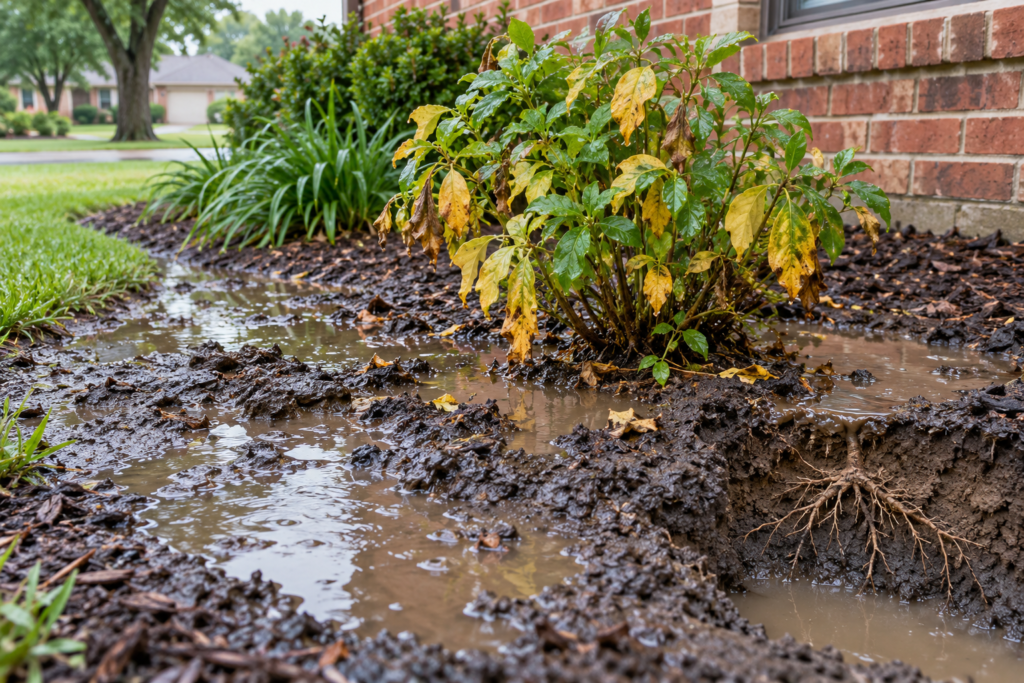
One of the most damaging mistakes is digging, tilling, or walking repeatedly on clay while it is wet. Wet clay compacts easily and may dry into hard clods.
Pick up a handful and squeeze it. If it forms a sticky ball that smears rather than crumbles, wait before working the bed.
Do not solve clay by adding a little sand
Mixing a modest amount of sand into clay can create a dense, concrete-like mixture. Changing the texture successfully would require an impractically large proportion of coarse material.
Organic matter is generally the more useful amendment for a garden bed.
Improve an entire bed—not one planting hole
Digging a large hole and filling it with soft imported soil can create a “bathtub.” Water enters the amended material but drains slowly through the surrounding clay. Roots may remain trapped in a wet pocket.
For shrubs and perennials:
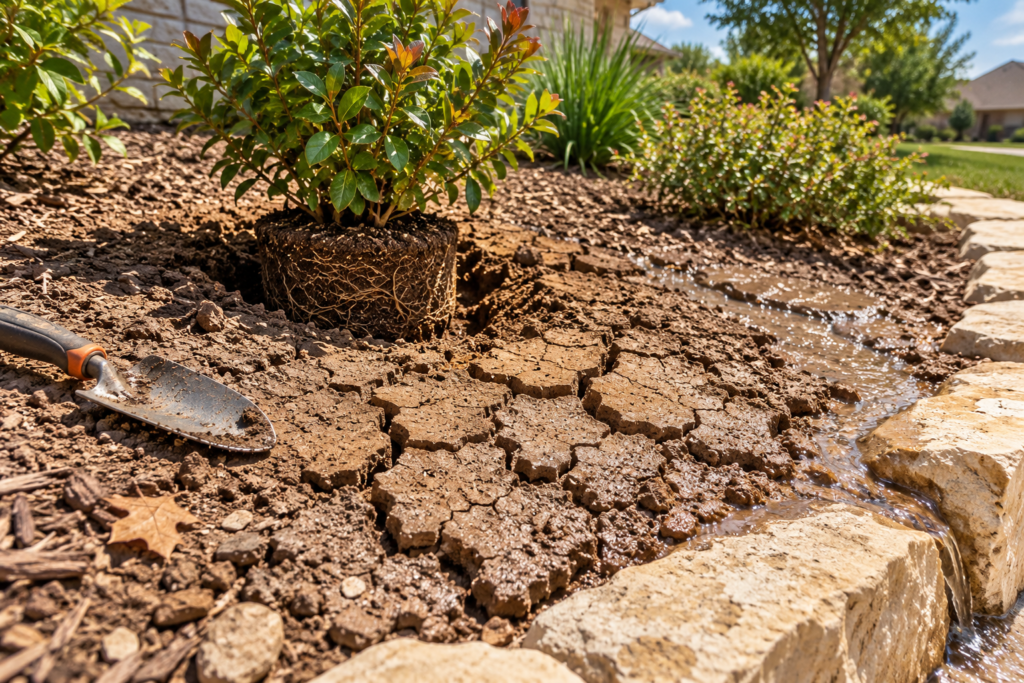
- Loosen a broad planting area.
- Plant slightly high when drainage is questionable.
- Use the existing soil as the primary backfill.
- Avoid burying the root flare of trees and shrubs.
- Mulch the surface after planting.
For annual flowers and vegetables, work compost into the broader bed rather than treating isolated holes.
Raised beds are often the easiest answer
Raised beds provide control over drainage and soil structure. They are especially useful for vegetables, herbs, strawberries, and plants that dislike wet winter soil.
A raised bed does not have to be extremely deep. Its purpose is to create a usable root zone above compacted clay while allowing excess water to move away.
Do not install an impermeable barrier between the bed and the ground. Roots and water should be able to move between the two layers.
Use mulch and living roots
Two to three inches of organic mulch protects clay from baking into a crust. It also reduces weeds, slows evaporation, and gradually contributes organic matter as it decomposes.
Living roots are another soil-building tool. Ground covers, cover crops, and permanent plantings create channels that help water and air enter the soil.
Watch drainage before planting
After a heavy rain, observe where water stands and how long it remains. A plant tolerant of alkaline soil may still fail if its roots remain waterlogged.
Place plants according to the yard’s natural drainage:
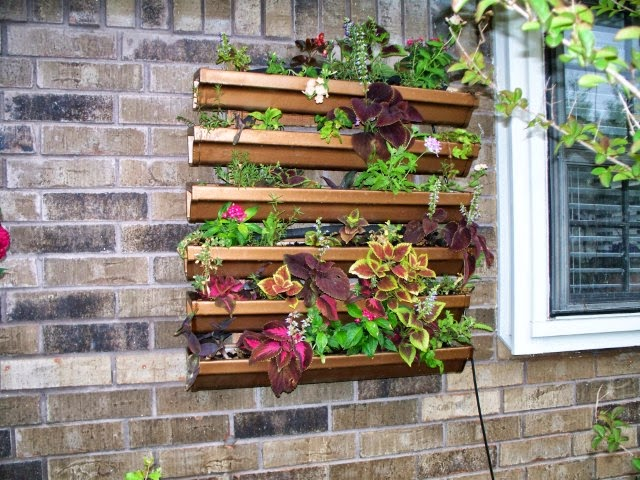
- Moisture-tolerant plants in lower areas
- Drought-tolerant plants on slopes and raised areas
- Plants needing sharp drainage in raised beds or berms
The goal is not to transform North Texas clay into loose forest soil overnight. Improve it gradually, prevent compaction, and select plants that can handle its natural characteristics.
Suggested featured image: Cracked North Texas clay beside a finished garden bed covered with organic mulch.
Related reading: Understanding North Texas Soil pH and Plants That Actually Grow Well in North Texas.
Suggested slug: /gardening-north-texas-clay-soil/
Meta description: Learn how to improve North Texas clay soil, avoid common mistakes, and create healthier beds without replacing your entire yard.