How to Help a Potted Bouganvillia Through a North Texas Winter
A healthy bougainvillea can be the star of a North Texas patio. Its colorful bracts seem made for summer sunshine, and a well-grown specimen can become more beautiful—and more difficult to move—each year.
Potted Bougainvillea Through a North Texas Winter
The challenge arrives when Garland’s warm afternoons give way to cold nights. Bougainvillea is a tropical plant and does not tolerate freezing weather. Fortunately, a container gives you options, provided you make a plan before a cold front arrives.
Choose a winter home before you need one
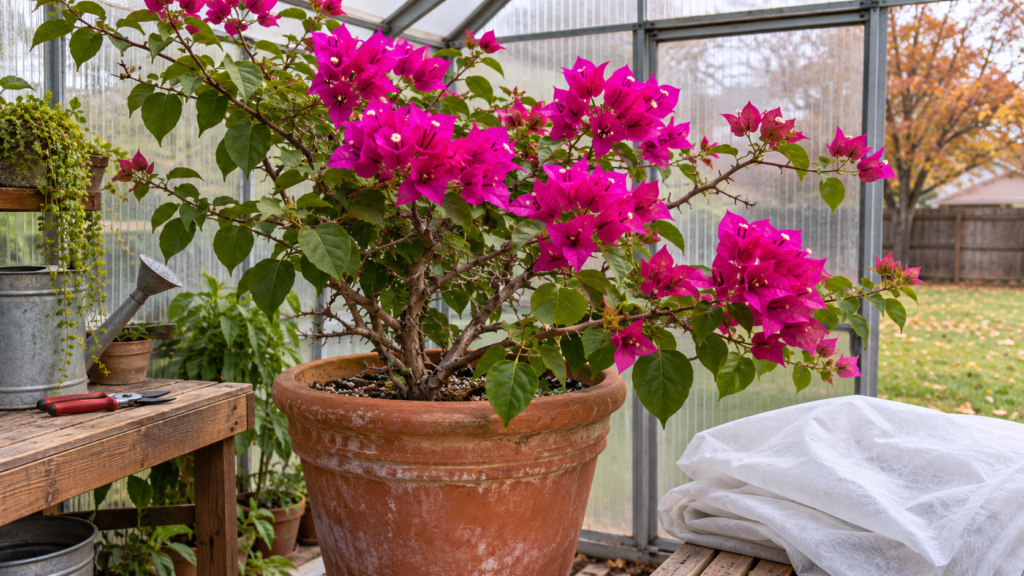
The most dependable place is a bright indoor area or a greenhouse with reliable heat. Texas A&M’s bougainvillea care guidance recommends keeping the plant no colder than 50°F during its winter resting period. Treat that as a useful conservative target rather than waiting until the forecast reaches freezing.
An unheated greenhouse, garage or covered porch may be useful for a brief cool spell, but none is automatically safe during a long or severe freeze. Put a minimum-reading thermometer near the plant and learn how cold that space actually becomes. A greenhouse heater needs enough capacity for the weather, and an outage can change the situation quickly.
If your bougainvillea is large, measure the doorway and make sure the pot can be moved safely. A sturdy plant caddy and a second person can be far more useful than trying to drag a heavy container across a patio at the last minute. Wear gloves: bougainvillea stems can have sharp thorns.
Check the plant before bringing it inside
Look closely at the undersides of leaves, tender shoots and stems for pests. Remove dead leaves and obvious debris. If you discover an infestation, identify the pest and select a treatment labeled for that plant and situation before bringing it near the rest of your collection.
Give the plant as much suitable light as your winter space permits. A change from full outdoor sun to a darker room can cause leaf drop. That is not always a sign that the plant has died; light, temperature and moisture all affect how it responds to the move.
Adjust your watering routine
Bougainvillea generally uses less water when growth slows and days become shorter. Check the potting mix and the weight of the container before watering. Let the upper mix dry between waterings, then water as needed and allow excess water to drain. Do not keep the root ball constantly wet, and do not let a saucer hold standing water.
At the same time, do not assume every resting plant can be forgotten for months. A pot kept in a warm, bright room may dry faster than one in a cooler greenhouse. Check regularly and adjust to the plant’s actual conditions.
Hold back on heavy feeding while growth is slow. If the plant remains warm and actively growing, follow an appropriate product label rather than applying the same amount you used during vigorous summer growth.
Prepare for the return outdoors
In spring, wait until frost danger has passed and nights are reliably warm enough for the plant. Move it back gradually: begin in a protected, bright location and increase direct sun over several days. Leaves that developed indoors can scorch if the plant goes straight into full Texas sun.
Prune with a purpose, removing dead or damaged stems and shaping only as needed. A small plant can be replaced, but a mature bougainvillea may represent years of care. A good thermometer, a workable moving plan and a little winter attention can help you enjoy it for many more seasons. #over winter Bouganvillias
Sources and further reading
Texas A&M AgriLife: bougainvillea care: https://aggie-horticulture.tamu.edu/ornamental/a-reference-guide-to-plant-care-handling-and-merchandising/selected-foliage-flowering-plants/flowering-plants/bougainvillea/
Dallas County Master Gardeners: bringing potted plants indoors: https://dallascountymastergardeners.org/tips-for-bringing-potted-plants-inside-for-the-winter/
Texas A&M AgriLife: protecting plants from frost and freezes: https://agrilifeextension.tamu.edu/asset-external/protecting-landscapes-and-horticultural-crops-from-frosts-and-freezes/