
🌿 Gardening Garland Newsletter
November 6–12, 2026
Practical gardening for Garland and North Texas
This week: Get ready for the first cold nights, make clay soil more garden-friendly, give greenhouse plants the right amount of water, and start a pot of fresh greens.
Welcome to the Garden
November is a month of change in North Texas. One afternoon may feel like spring, while the next morning has us searching for frost cloth. That makes this a good week to prepare without putting the garden completely to bed.
There are still flowers to enjoy, vegetables to grow, and plenty of small jobs that will make next spring easier. Let’s start with seven practical things to do around the garden.
📅 Your Week in the Garden
| Day | What to do |
| Friday, November 6 | Walk through the garden and identify tender plants that will need protection or a place indoors before cold weather arrives. |
| Saturday, November 7 | Check containers. Water the ones that are dry, and make sure excess water can drain freely. |
| Sunday, November 8 | Gather frost cloth, stakes, and clips. Keep them somewhere easy to reach when a freeze is forecast. |
| Monday, November 9 | Add a layer of mulch around established plants, leaving a little space around stems and trunks. |
| Tuesday, November 10 | Inspect greenhouse plants for insects, yellowing leaves, and pots that stay wet too long. |
| Wednesday, November 11 | Plant a container of cool-season greens, or harvest a few outer leaves from plants already growing. |
| Thursday, November 12 | Clean and put away one group of tools. Make a note of anything that needs repair before spring. |
This week’s reminder: Check the local forecast regularly. The date on the calendar cannot tell us exactly when a particular Garland garden will experience its first frost.
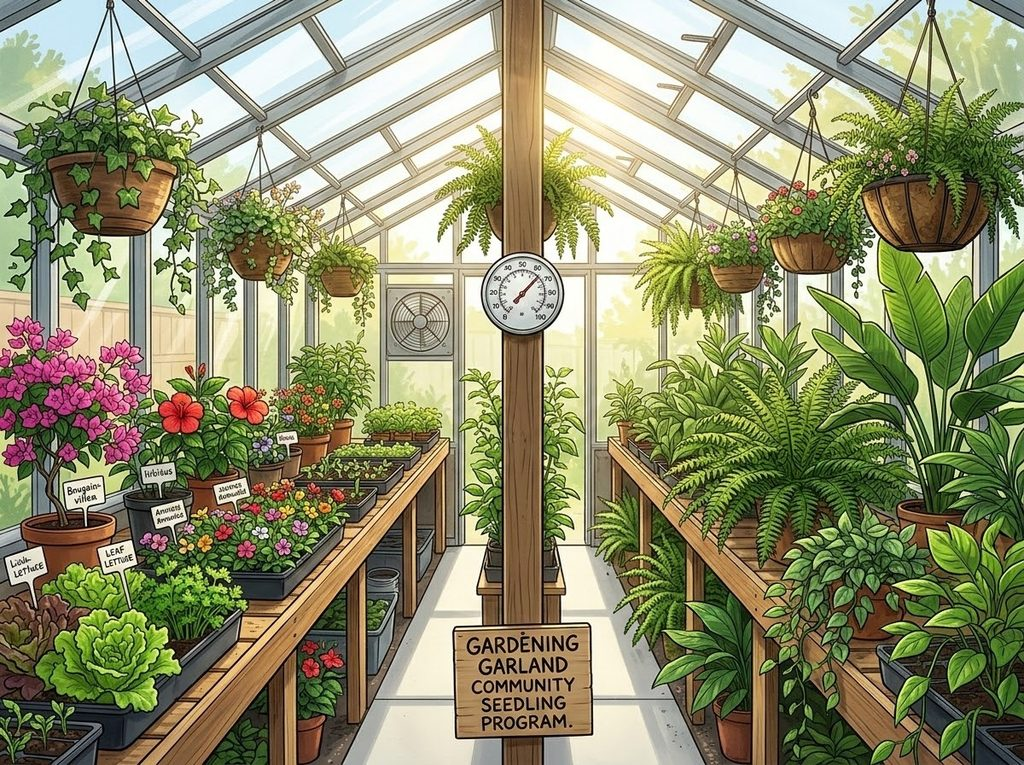
🌡️ Greenhouse Corner: Warm Roots, Careful Watering
As nights cool, greenhouse watering becomes a little more complicated. Plants may need less water because they are growing more slowly, but sunny afternoons can still dry small pots surprisingly quickly.
The best approach is to check the pot before reaching for the hose. Lift a small container to judge its weight, or feel the mix an inch or so below the surface. If it is still moist, check again later. If it is dry and the plant needs water, water thoroughly and allow the excess to drain.
A few other things to watch this week:
- Use a thermometer at plant height. Temperatures near the roof can be different from those around your pots.
- Ventilate on warm days. A closed greenhouse can heat up quickly, even in November.
- Look for condensation and crowded leaves. Good air movement helps foliage dry and makes it easier to spot developing problems.
- Keep tender plants away from cold glass or plastic walls. Leaves touching a cold surface can be damaged even when the greenhouse feels comfortable to you.
- Check heaters and thermostats before a cold night. A short test now is easier than troubleshooting after dark.
Different plants need different winter temperatures. Bougainvillea, desert rose, croton, and tropical hibiscus deserve particular attention as nights cool.
🌱 Garden Story 1: What North Texas Clay Needs Most
If you are new to Garland, your first encounter with the soil may be memorable. When dry, clay can feel almost like concrete. After a heavy rain, it can become sticky enough to cling to your shoes and tools.
Clay is not a hopeless soil. It can hold water and nutrients well, but its small particles also make it easy to compact. The key is to improve its structure gradually.
Start by adding compost to the surface of a bed and letting it work into the soil over time. Mulch above the compost helps protect the soil surface from pounding rain and reduces crusting. When creating a new bed, you can also build it slightly above the surrounding ground to improve drainage.
Avoid digging or tilling clay when it is wet. Squeeze a handful: if it forms a sticky ball that does not crumble easily when touched, give it more time to dry.
One more point: adding a little sand to clay is generally not a good shortcut. Focus on organic matter, drainage, and avoiding compaction instead.
Try this: Pick one small bed to improve this fall. A manageable project is easier to maintain and gives you a chance to see how your soil responds.
Suggested photo: A close view of North Texas clay alongside a mulched garden bed.
🌺 Garden Story 2: A Simple Frost Plan Before You Need It
The easiest time to make a frost plan is before the weather forecast becomes alarming.
First, divide your plants into three groups:
- Plants that can stay outside. Many established, cold-hardy perennials and shrubs can handle ordinary winter weather, although newly planted specimens may need extra attention.
- Plants you can move. Small pots of tropicals and other tender plants can go into a greenhouse, garage, or protected indoor space when needed.
- Plants you need to cover. Larger tender plants or in-ground specimens may need frost cloth and supports.
When covering a plant, drape frost cloth over stakes or a frame and bring the edges down to the ground, securing them so wind cannot lift the fabric. The goal is to trap some of the warmth rising from the soil. Avoid letting plastic rest directly on foliage, and remove or vent covers when temperatures rise enough to prevent overheating.
A light frost and a prolonged hard freeze are different challenges. A cover may offer limited protection, but it cannot guarantee that a tropical plant will survive severe cold.
Try this: Write a short list of the five plants you would be most upset to lose. Decide today where each one will go or how you will cover it.
Suggested photo: A gardener placing frost cloth over a supported garden bed.
✂️ Garden Story 3: Propagation in November—Choose Your Projects Carefully
It is tempting to take cuttings from everything before winter, but not every plant roots well under cool, short-day conditions. A better plan is to choose healthy material and give each batch the conditions it needs.
For a small experiment:
- Select healthy, pest-free growth from a plant you know you can propagate.
- Take several clean cuttings rather than relying on only one.
- Label the plant and the date.
- Place the cuttings in a clean, well-drained rooting medium.
- Provide bright, indirect light and appropriate warmth and humidity for that plant.
- Check regularly for mold, wilting, or drying.
Warmth around the rooting medium can be useful for many tropical and subtropical cuttings, but the right temperature varies by plant. Avoid keeping the medium soggy, and do not assume that a cutting with green leaves has already rooted.
If a plant is dormant, weak, flowering heavily, or carrying pests, it may be better to protect the parent plant and wait for a more suitable propagation window.
Keep a simple record: Plant name, date taken, method, and number that root. Over a season, those notes become a guide to what works in your greenhouse.
Suggested photo: Labeled cuttings in a clean propagation tray.
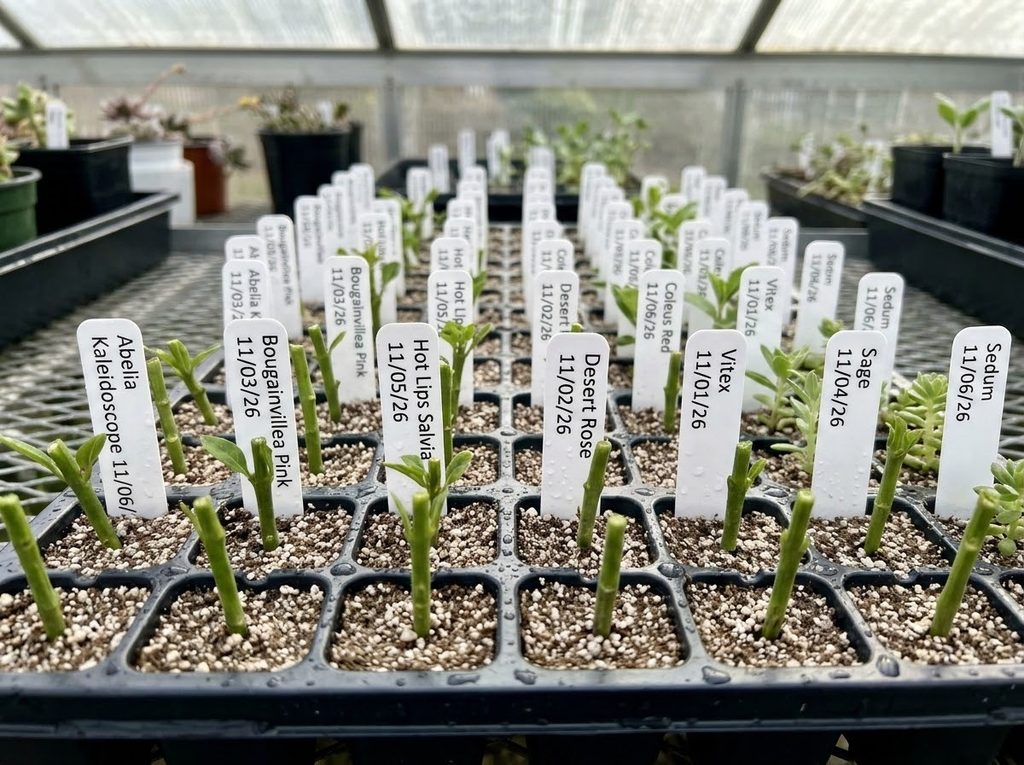
Propagation Tray Setup
Using a clean, well-drained propagation tray with clear plant labels helps track rooting progress and ensures organized batch management. Keep the rooting medium evenly damp, maintain stable bench warmth, and provide bright, indirect light to encourage healthy root development.
🥬 From the Vegetable Garden: Grow a Pot of Cool-Season Greens
You do not need a large vegetable bed to enjoy fresh greens. A roomy container near the kitchen door can hold a small crop of leaf lettuce, spinach, or other cool-season favorites.
Choose a pot with drainage holes and fill it with a good container mix. Set it where it receives several hours of sunlight, and follow the seed packet or transplant label for spacing and planting depth.
Because November planting windows vary with the crop and weather, young transplants may give you a quicker start than seed this late in the fall. Check local planting guidance for the variety you choose. Keep the mix evenly moist while plants establish, and be prepared to protect them during severe cold.
Once plants are large enough, harvest a few outer leaves at a time. Leave the center growing point intact so the plant can continue producing.
For gardeners with limited space, try placing the greens beside a pot of parsley or other cool-season herbs. You will have a small, useful kitchen garden without giving up the whole patio.
Suggested photo: A container of leafy greens beside a kitchen door.
🌸 Plant of the Week: Autumn Sage
Autumn sage (Salvia greggii) is a Texas native shrub that can bring color and pollinators into a sunny garden. Depending on the selection, its flowers may be red, pink, coral, white, or another shade.
Give it plenty of sun and a site that drains well. In heavy clay, a raised or gently mounded bed can help keep the roots from sitting in excess water. Once established, autumn sage generally needs less supplemental water than many thirstier landscape plants, though new plants need regular attention while their roots grow.
Its small leaves and airy flowers make it useful along a path, near a patio, or in a mixed bed with grasses and other sun-loving plants. Hummingbirds appreciate the flowers, too.
Gardener’s note: Plant performance varies with drainage, exposure, and the particular selection. Watch how it does in your own spot before committing to a long row.
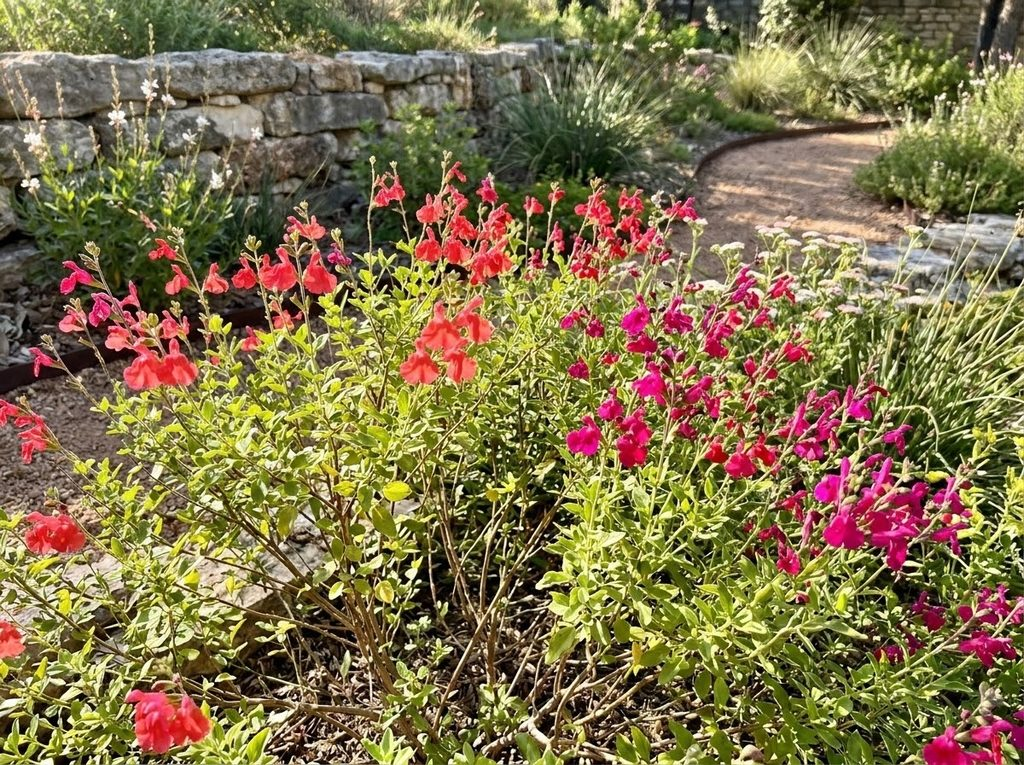
Pink or red autumn sage flowering in a sunny Texas garden.
📍 Around North Texas: Gardening Events
Winter Garden Preparation Workshop
Saturday, November 7 · 1–3 p.m.
Lake Dallas Public Library, 302 S. Shady Shores Drive, Lake Dallas
A free workshop presented by Master Gardeners on protecting plants, improving soil health, and preparing the garden for colder weather. Registration is required. Event details and registration. Workshop: Garden Winter Prep
Buzz, Blooms & Brew: The Tea Lab
Sunday, November 8 · 2–3:30 p.m.
12th Street Center at Halperin Park, Dallas
Learn about harvesting and drying herbs, flowers, and leaves for tea blends. The organizer lists registration on its events page; check the current ticket details and availability before going. GROW North Texas events. Events
Looking Ahead: Drought-Tolerant Gardening
Saturday, November 14 · 1 p.m.
Preston Royal Branch Library, Dallas
The Dallas County Master Gardeners list this presentation on their upcoming-events calendar. Check the calendar for further details before attending. Dallas County Master Gardeners. Texas A&M Agrilife Extension
❓ Ask a Garland Gardener
“Should I keep watering outdoor plants when the weather turns cool?”
Yes, but check the soil and the weather before watering. Cooler temperatures often slow evaporation, so established plants may need water less frequently than they did in summer. Newly planted trees, shrubs, and perennials still need attention while their roots become established.
Feel the soil below the surface rather than judging only by the dry-looking top. When watering is needed, water thoroughly and allow time for the soil to drain. Containers dry differently from in-ground beds, so check them separately.
📷 Show Us Your Garden
What is still looking good in your garden this November? Is there a salvia blooming, a pot of greens growing, or a corner you are preparing for winter?
We would love to see what Garland gardeners are growing. Visit Gardening Garland and share your garden ideas with the community.
Happy gardening,
Gardening Garland